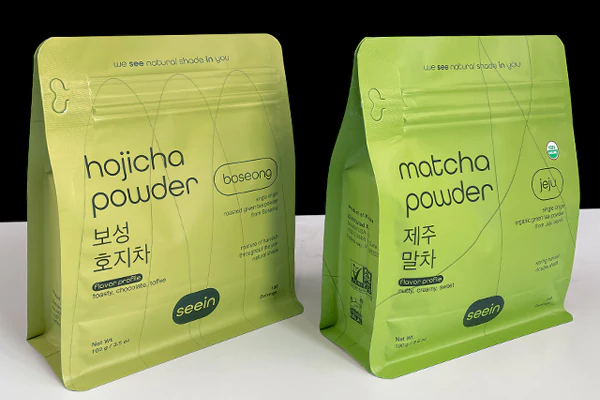
Personalized coffee packaging works well for small coffee businesses because one bag can handle product protection, shelf presentation, origin information, brand recognition, and repeat-purchase information without requiring a separate marketing format. In 2024, 67% of U.S. adults drank coffee during the previous day, while 45% drank specialty coffee, giving independent roasters access to a large market where packaging often becomes the first physical contact with a brand. Proper barrier materials, resealable zippers, one-way valves, flexible print runs, batch-specific designs, and clear roast information also let smaller businesses manage freshness and product variation without ordering huge quantities of identical bags.
Small roasters operate in a market where packaging has to do more work per unit sold. National Coffee Association data published in 2024 reported that 67% of American adults consumed coffee in the previous day, compared with 49% in 2004, a 37% increase over 20 years. Specialty coffee reached 45% of adults in the previous day, up 80% from 2011. A small roaster therefore competes not only with nearby cafés but with supermarket brands, online subscriptions, specialty retailers, and direct-to-consumer sellers.
That competition makes the bag itself useful retail space. A 250 g, 340 g, or 1 lb pouch can carry the brand name, coffee origin, roast date, process, variety, tasting notes, net weight, brewing guidance, website, and QR code without adding another printed item. For a company selling several hundred rather than several million bags, repeated exposure to the same package at home can provide more practical brand visibility than paying for another short-lived ad.
A coffee bag may remain on a kitchen counter for 7–21 days. During that period, the customer can see the brand every time coffee is prepared, making packaging one of the few marketing materials that stays beside the product throughout use.
Presentation becomes more important once a small roaster sells beyond its own counter. A plain stock pouch with an adhesive label can work during an early launch, but permanently printed graphics make product families easier to organize when the range grows to 4, 8, or 12 coffees. One visual system can keep the logo and layout stable while using different names or graphics for an Ethiopian natural coffee, Colombian washed lot, espresso blend, and decaf.
That product organization also reduces errors. When several roast profiles share nearly identical generic bags, staff must rely on small labels and manual checks. Printed differentiation gives packing staff and customers larger visual references. A café shipping 200 orders per week only needs a 1% packing error rate to create two incorrect shipments weekly, so packaging clarity has an operational use beyond appearance.
Freshness places a more measurable requirement on the package. The Specialty Coffee Association notes that oxygen is one of the main causes of roasted-coffee staling. Research summarized by the SCA found that lowering oxygen inside a coffee container to 0.5% could extend shelf life by about 20 times under the tested conditions, while another study reported an approximately 10% increase in degradation rate for every 1% increase in oxygen.
For that reason, a personalized bag should be specified from the inside outward. Barrier performance, seal quality, filling temperature, valve placement, closure type, and expected distribution period need attention before graphics. Coffee sold 3 days after roasting through a local café has different packaging demands from coffee expected to spend 8–12 weeks moving through wholesale storage, retail shelves, and a customer's pantry.
Freshly roasted beans also release carbon dioxide. SCA educational material describes rapid CO₂ loss during roughly the first 20 days after roasting, followed by a slower rate. Whole beans can continue changing for weeks, while grinding accelerates gas loss substantially. A properly selected one-way degassing valve allows gas to leave a sealed pouch while limiting outside air entry, which is useful when beans are packed shortly after roasting.
| Packaging element | Practical purpose | Useful consideration |
|---|---|---|
| High-barrier film | Limits oxygen and moisture exposure | Match barrier level to expected shelf life |
| One-way valve | Releases coffee-generated gas | Common for freshly roasted whole beans |
| Resealable zipper | Helps consumers close an opened bag | Useful for 250 g–1 lb retail packs |
| Heat seal | Protects unopened product | Seal integrity matters as much as film choice |
| Digital printing | Supports multiple designs | Useful for smaller SKUs and seasonal runs |
| QR code | Adds information without crowding artwork | Test scanning before production |
Once protection is specified, smaller print quantities become financially relevant. Traditional packaging economics favored long print runs because plate, cylinder, tooling, setup, and changeover costs could be spread across many units. Digital printing changes part of that calculation because artwork can be changed without producing a dedicated printing plate for every design. A roaster selling 6 origins during a year can therefore consider separate artwork for each coffee rather than purchasing one oversized quantity of a universal bag.
Inventory exposure falls with shorter runs as well. Suppose a business orders 20,000 preprinted bags but sells only 1,000 bags per month. The packaging represents roughly 20 months of stock before considering damaged units, brand updates, regulatory changes, discontinued coffees, or package-size revisions. An order of 3,000–5,000 units carries a different inventory profile, even where the unit price is higher.
Smaller batches also suit specialty coffee because green-coffee availability changes. A particular farm lot may last only one season, and harvest information can change between 2025 and 2026. Printing farm name, region, processing method, elevation, cultivar, or harvest information directly on appropriately sized runs gives buyers more specific information without forcing a roaster to cover obsolete text with another label later.
Customer demographics strengthen the case for detailed information. In the NCA's 2024 specialty-coffee reporting, 66% of U.S. consumers aged 25–39 drank specialty coffee during the previous week, and specialty drinkers averaged 2.8 cups per day compared with 1.8 cups among traditional coffee drinkers. Product information therefore reaches a population that purchases and consumes coffee frequently enough to compare origins, formats, and roast styles.
The package can use that space for factual information rather than broad claims. "Washed Caturra, 1,700–1,900 m, medium-light roast, notes of orange and cocoa" tells a shopper more than "exceptional artisan coffee." A roast date, lot name, brewing ratio, farm or cooperative, processing method, and QR code can help customers understand why two 340 g bags from the same roaster have different prices.
Useful packaging copy answers questions customers actually ask: What coffee is inside? Where was it grown? How was it processed? When was it roasted? How should I brew it? How do I buy it again?
Repeat purchasing can then be made easier without filling the front panel with promotional text. A QR code can open a brew guide or product page, while the back panel can provide a short URL and subscription information. If a customer finishes a 340 g bag in 10–20 days, the reorder path should remain available on the package when the purchase need appears.
Personalization also gives small businesses more room for limited releases. A roaster might produce 500 bags for a holiday blend, 1,000 for a café collaboration, or a small run for a single-estate coffee that will not return after the current harvest. Digital artwork can change the coffee name, illustration, batch details, or message without requiring the visual identity of the entire range to change.
The same approach can support wholesale accounts. A roaster supplying 10 independent cafés may use a shared structural format while adjusting selected printed areas for private-label or co-branded products. Standardizing pouch dimensions and filling procedures while changing print content helps prevent every account from becoming a completely different packaging operation.
Material choice requires more care than simply selecting a package described as environmentally friendly. Conventional high-barrier coffee bags often combine several layers because sealing, stiffness, moisture resistance, oxygen resistance, printing, and mechanical strength may require different properties. Alternative structures have to protect coffee well enough to avoid increasing food waste through premature staling.
For businesses considering compostable flexible packaging, disposal conditions should be checked alongside barrier performance. "Compostable" does not automatically mean a package will break down quickly in a backyard compost pile; certification can refer to defined industrial-composting conditions. The business also needs to check local collection infrastructure, required labeling, inks, valves, zippers, and whether every component follows the same disposal route.
Packaging rules are also becoming more detailed in major overseas markets. Regulation (EU) 2025/40 established a newer EU framework for packaging and packaging waste, with implementation requirements continuing through later dates. A small coffee company planning European distribution should therefore avoid treating package claims, recyclability statements, material selection, and labeling as permanent choices that can remain unchanged for 10 years.
Cost comparisons should include more than the quoted price per pouch. A lower-cost generic bag may require labels, label printing, staff application time, additional inventory, and separate inserts. If hand-labeling takes 12 seconds per pouch, preparing 5,000 units consumes about 16.7 staff hours before filling begins. Preprinted packaging can remove part of that repetitive handling while providing more printable area.
Storage deserves the same calculation. Twenty cartons of packaging occupying warehouse shelving for 18 months tie up space and cash even when each pouch was inexpensive. Shorter runs may cost more per unit yet allow artwork, compliance text, roast ranges, and package sizes to change sooner. The preferred order quantity depends on monthly sales, supplier lead time, cash position, storage area, and the probability of an artwork change.
Before production, artwork should be reviewed at 100% physical size rather than only on a large monitor. A QR code should be test-scanned on the actual printed material, small text should remain readable after sealing and filling, and important copy should stay away from zipper, seal, valve, gusset, and fold areas. A physical sample filled with the intended 250 g, 340 g, 500 g, or 1 kg quantity can reveal problems that a flat digital proof cannot show.
Packaging should then be tested as part of normal coffee handling. Fill samples, heat-seal them using the intended equipment, store them for the expected distribution period, open and reseal them repeatedly, and inspect seals after shipping. Published research summarized by the SCA included one small test of only six valve-equipped flexible bags; three developed leaks, showing why seal execution can matter as much as the nominal barrier specification.
A small business does not need dozens of decorative features to benefit from personalization. A consistent logo, readable product hierarchy, accurate coffee information, suitable barrier structure, dependable seal, and a repeat-order path can fit on one pouch. For a company selling 10,000 bags a year, every printed unit creates another customer contact while simultaneously carrying and protecting the coffee.