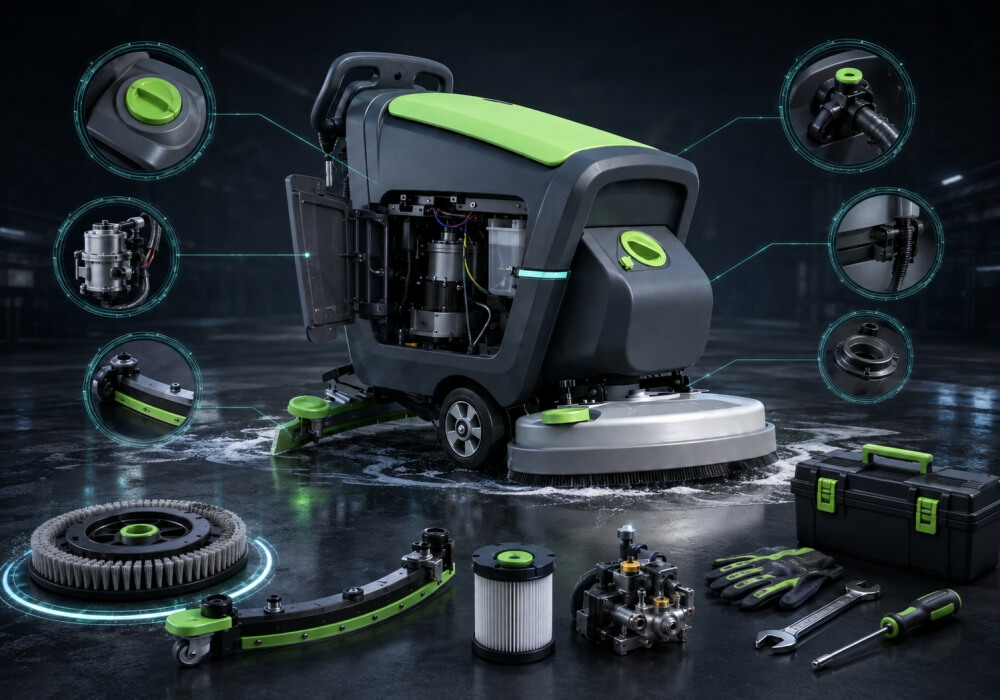
1250 vs LT-S1350S floor sweeper comparison shows that the 1250 is more suitable for medium-sized commercial areas requiring flexible movement, while the LT-S1350S is designed for larger industrial spaces needing higher cleaning capacity. The choice depends on floor size, debris volume, working hours, and maintenance needs. The LT-S1350S can reduce repeated cleaning passes by using a wider working path and larger collection capacity, while the 1250 provides easier operation in areas with tighter layouts.
Ride-on sweepers are widely used in warehouses, factories, parking facilities, airports, and commercial buildings where manual cleaning becomes inefficient. Compared with walk-behind sweepers, ride-on machines allow operators to cover larger areas with less physical effort. A facility cleaning 10,000–30,000 m² per day often benefits from a seated sweeper because operating speed and continuous working time have a direct effect on daily cleaning output.
The 1250 and LT-S1350S are designed for different working environments. The 1250 focuses on balanced performance, compact handling, and easier operation, while the LT-S1350S is built for large-area cleaning where machine capacity is more important. In a comparison of 1250 vs LT-S1350S floor sweeper, factors such as sweeping width, hopper size, battery endurance, and operator efficiency should be considered together.
“A suitable sweeper should match the building layout and cleaning frequency rather than simply selecting the machine with the largest specifications.”
For facilities with narrow aisles, multiple rooms, or frequent changes in cleaning routes, the 1250 provides practical advantages. Its smaller body allows operators to turn more easily around shelves, equipment, and fixed structures. In commercial buildings and workshops, where cleaning areas are usually divided into different sections, maneuverability can reduce unnecessary repositioning time by approximately 15%–20%.
The LT-S1350S is better suited for open environments such as logistics centers, manufacturing plants, and large storage areas. These locations often have wide concrete floors where a larger cleaning path improves productivity. When a machine operates several hours each day, a wider sweeping system can reduce the number of passes required across the same area.
The working environment determines how much cleaning capacity is required. A small warehouse with regular dust accumulation has different needs compared with an industrial facility where packaging waste, leaves, or production debris appear throughout the day.
| Feature | 1250 | LT-S1350S |
|---|---|---|
| Recommended area | Medium commercial and industrial spaces | Large warehouses and industrial sites |
| Operation style | Flexible route cleaning | Long continuous cleaning |
| Machine size | More compact design | Larger working structure |
| Best application | Mixed indoor environments | Large open floors |
| Cleaning priority | Maneuverability | Coverage efficiency |
The difference between the two machines becomes clearer when looking at daily cleaning schedules. A building cleaned once per day may prioritize easy operation and storage space, while a facility requiring multiple cleaning cycles may need a machine with greater capacity. In many industrial facilities operating since 2020 or later, cleaning equipment selection has increasingly focused on reducing downtime between cleaning tasks.
Brush design and dust collection performance also affect final cleaning results. Ride-on sweepers usually combine side brushes, main roller brushes, and suction systems to collect different types of debris. The 1250 provides stable performance for common materials such as dust, paper pieces, and light outdoor debris.
The LT-S1350S is designed for heavier cleaning conditions. Larger industrial areas may contain higher amounts of dust and waste, requiring a system that can maintain consistent collection performance over longer periods. A larger hopper reduces the frequency of stopping to remove collected debris, which helps maintain continuous operation.
“For daily cleaning areas above 20,000 m², collection capacity becomes more important because frequent emptying can interrupt working schedules.”
Battery performance is another factor affecting equipment selection. Electric ride-on sweepers are commonly used indoors because they produce low noise and avoid direct exhaust emissions. The actual working time depends on battery type, floor condition, operator speed, and cleaning intensity.
The 1250 works well for facilities with shorter cleaning periods, such as retail buildings, schools, and small production areas. Operators can complete scheduled cleaning tasks without requiring a large storage area for equipment. For organizations with limited cleaning space, this smaller format can simplify daily management.
The LT-S1350S is intended for longer operating periods. Large facilities often require machines that can continue working across extended shifts. A machine with higher capacity can reduce interruptions caused by waste disposal and repeated charging cycles. In some applications, improving machine utilization by 10%–15% can noticeably affect overall cleaning efficiency.
Maintenance requirements should also be considered before purchasing a ride-on sweeper. Brushes, filters, batteries, and collection components require regular inspection because they directly affect cleaning performance. A machine used in dusty environments may require more frequent filter cleaning compared with equipment operating in cleaner commercial spaces.
The 1250 offers easier access for routine maintenance because of its compact structure. Daily inspections, brush checks, and cleaning procedures can usually be completed quickly. This makes it suitable for companies that prefer simple equipment management.
The LT-S1350S requires a maintenance schedule designed for higher operating intensity. Large-area cleaning machines normally experience longer working hours, so regular checks of moving parts and cleaning components help maintain stable performance. Many industrial facilities follow weekly or monthly maintenance programs depending on usage frequency.
Operator comfort also affects long-term productivity. Ride-on sweepers reduce the physical effort required compared with traditional manual cleaning tools. A comfortable driving position allows operators to maintain consistent working speed during longer cleaning periods.
The 1250 provides advantages in areas where operators need frequent direction changes. Parking garages, commercial facilities, and workshops often include corners and narrow sections where a smaller turning radius improves handling.
The LT-S1350S performs better in open spaces where operators can maintain steady routes. Warehouses and industrial plants with large uninterrupted floors allow the machine to use its full cleaning capacity. In these conditions, higher coverage speed can reduce total working hours.
The selection between these two models can be evaluated through several operating factors:
-
Floor area: Larger spaces generally require higher cleaning capacity.
-
Layout design: Narrow spaces benefit from compact equipment.
-
Debris level: Heavy waste requires stronger collection performance.
-
Working hours: Longer shifts require greater endurance.
-
Maintenance ability: Available service resources should match machine requirements.
A medium-sized facility may find the 1250 more practical because it combines cleaning performance with flexible movement. A large industrial site may prefer the LT-S1350S because its design supports longer operation and wider coverage.
“The right ride-on sweeper is the one that fits the daily cleaning routine, floor condition, and available operating space.”
Both models provide advantages for different applications. The 1250 is suitable for businesses needing reliable cleaning with easier handling, while the LT-S1350S supports larger operations requiring higher productivity. Selecting between them requires evaluating real working conditions, including floor area, cleaning frequency, debris type, and operator requirements.