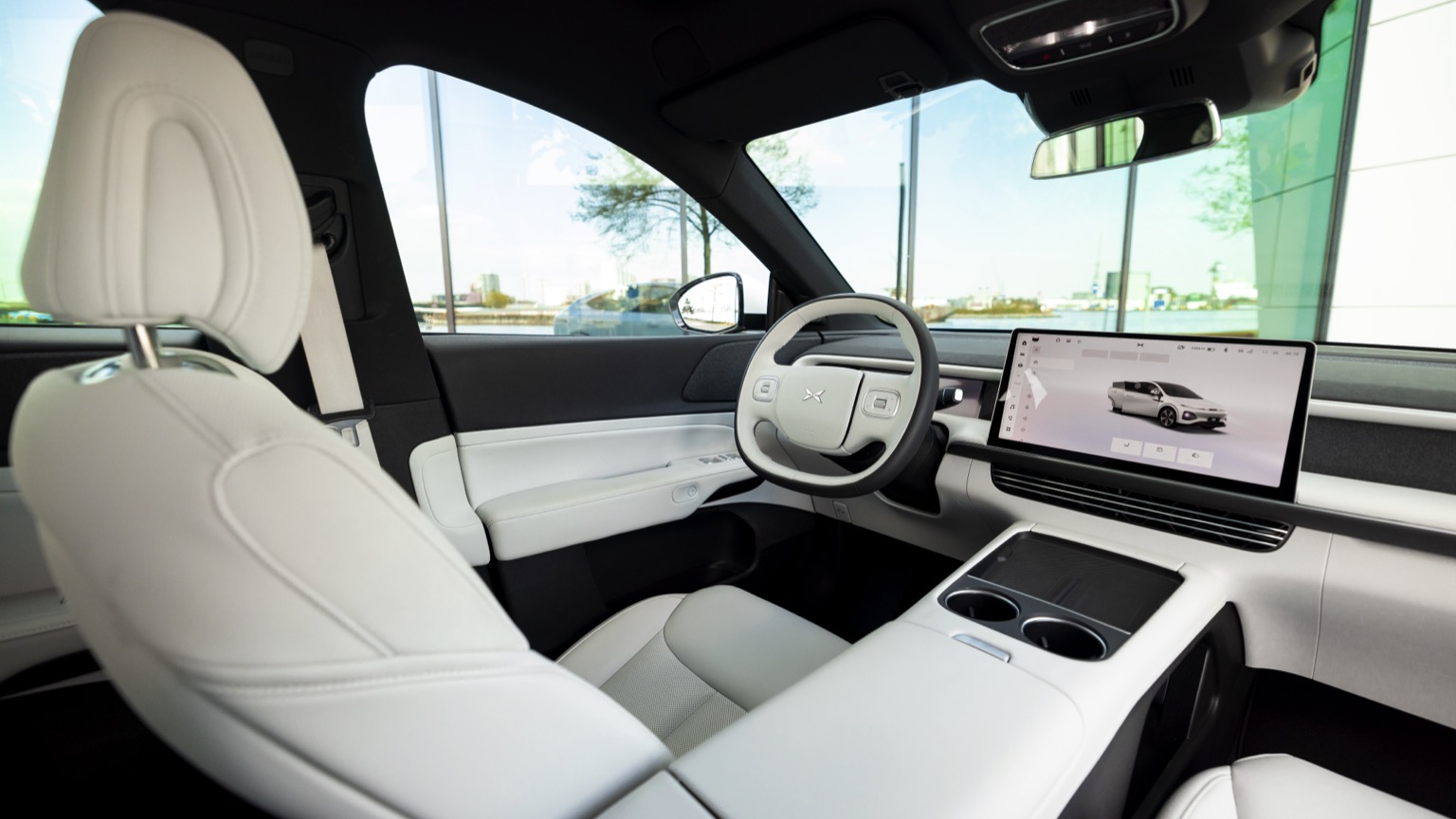
Choosing an EV SUV in Australia starts with weekly kilometres, home-charging access, passenger space, highway use and towing rather than the largest advertised battery. In 2025, SUVs represented 60.7% of Australian light-vehicle sales, while more than 100 battery-electric models were available nationally. By July 2026, battery-electric vehicles reached 22.3% of monthly new-vehicle sales, showing how quickly buyer choice is expanding. A household covering 250 km a week may be comfortable with a moderate-range SUV, while regular 500 km regional trips put much more emphasis on highway efficiency, DC charging speed and charger spacing. Match usable range and charging access to real journeys before comparing performance or luxury equipment.
Australian buyers now have enough EV choice that vehicle type matters as much as powertrain. More than 1.2 million light vehicles were sold nationally in 2025, and SUVs took 60.7% of the market. Battery-electric vehicles accounted for 8.3% across that full year, while hybrids reached 23.6% and plug-in hybrids 4.2%. The larger 2026 EV share shows that comparing electric SUVs is becoming a normal part of mainstream car shopping rather than a small specialist category.
That wider choice makes size the first useful filter. A compact electric SUV can suit a couple driving 40–60 km each weekday, yet the same vehicle may feel cramped when two child seats, a pram and several travel bags are loaded. Measure rear legroom, rear-door openings and the cargo floor instead of relying on the word “SUV,” because two vehicles with similar exterior lengths can provide noticeably different usable space.
Cargo figures also need context. A quoted luggage volume may be measured only below the parcel shelf, may include underfloor storage, or may use a different measurement method from another manufacturer. Families should test their own pram, sports equipment or suitcases where possible, particularly when a vehicle will remain in the household for 5–8 years and children will require more space over that period.
A useful size test is simple: configure the front seats for the two regular drivers, install the child seats if required, then check whether the normal weekly luggage still fits without folding the rear seats.
Once the cabin works, range becomes easier to judge. A 500 km laboratory rating should not be treated as a promise of 500 km on every trip. Highway speed, tyre pressure, temperature, elevation, cabin cooling and passenger load alter electricity use, while towing can produce an even larger change because a tall trailer adds aerodynamic resistance.
For example, an owner who normally travels 80 km a day does not automatically need 600 km of claimed range. Even allowing a substantial reserve, charging every second or third night may be enough. A driver regularly completing 400 km regional journeys faces a different calculation because arriving with 10–20% battery remaining provides more flexibility when a charger is occupied or temporarily unavailable.
Battery size alone does not solve that problem. Compare consumption in kWh/100 km because a more efficient SUV can travel a similar distance with a smaller battery. At 17 kWh/100 km, a 400 km trip requires about 68 kWh before losses and reserve are considered; at 23 kWh/100 km, the same distance requires roughly 92 kWh. That 24 kWh difference affects both charging time and electricity purchased during repeated long trips.
Wheel and tyre choices can alter the result further. Larger wheels commonly use wider tyres and lower sidewalls, which may increase rolling resistance and replacement cost while reducing ride comfort on rough regional roads. When two variants differ mainly through 19-inch versus 21-inch wheels, checking official efficiency figures and tyre prices can be more useful than choosing the larger wheel on appearance alone.
Charging then becomes part of the range calculation. The Electric Vehicle Council has reported that more than 80% of EV charging generally takes place at home or work where owners have suitable access. For a driver travelling 12,000–15,000 km a year, reliable overnight charging may therefore affect convenience more often than a public charger capable of an exceptionally high peak rate.
Home charging also changes how much range feels necessary. A vehicle parked for 10 hours overnight does not need to refill its entire battery every day; it only needs to replace the energy consumed since the previous charge. Someone using 15 kWh during a normal weekday can recover that energy comfortably with suitable home equipment while sleeping.
Apartment buyers need a different check before choosing among suv cars australia. Ask whether the assigned parking bay has electrical access, whether the building has load management, and whether body-corporate approval is required. A long-range battery provides little day-to-day convenience if charging requires repeated trips to public infrastructure.
Public charging still matters for holidays and regional travel. Australia had 1,059 fast and ultra-fast public charging locations by mid-2024, containing more than 1,849 high-power chargers; the number of high-power locations had risen about 90% from a year earlier. By the 2025 State of EVs reporting period, New South Wales alone had 357 fast or ultra-fast locations, Victoria 311 and Queensland 235.
Those national totals should not replace route planning. A driver travelling mainly between major east-coast cities has different access from someone crossing inland Western Australia or travelling through remote parts of the Northern Territory. Before purchase, map two or three journeys taken several times a year and note charger power, alternative sites and the distance between them.
Peak DC charging power deserves the same caution as maximum range. A vehicle advertised at 250 kW may touch that figure only under suitable battery temperature and state-of-charge conditions. What matters on a 700 km journey is how many minutes are needed to add enough energy for the next section, not the highest number displayed for a short period during charging.
A practical comparison can therefore look like this:
| Use pattern | More useful specification | Why it matters |
|---|---|---|
| 30–60 km daily city use | Efficiency and home charging | Large batteries may be used rarely |
| 250–400 km weekend trips | Highway range and DC charging | Fewer or shorter public stops |
| 500+ km regional travel | Charger spacing and charging curve | Route flexibility matters more |
| Regular family use | Rear space and cargo access | Daily practicality affects every trip |
| Caravan or trailer use | Rated towing capacity and towing range | Energy use can rise considerably |
Towing requires especially conservative planning. The Australian-market tow rating must be checked for the exact variant because a rear-wheel-drive and all-wheel-drive version can have different limits. Added mass affects acceleration and climbing, while a tall caravan can increase aerodynamic demand enough to reduce practical range well below the vehicle’s unladen figure.
Charging-site layout matters for the same reason. Some bays require a vehicle towing a trailer to unhitch before connecting, adding time to a trip even when charging itself is fast. A buyer towing perhaps 10 weekends a year should examine the actual stations along those routes rather than treating towing capacity as a single brochure number.
Safety should then be checked at variant and build-date level. ANCAP awarded the XPENG G6, Leapmotor C10 and Zeekr X five-star ratings in 2024, while newer 2025 assessments also show large differences between individual scoring categories. For example, the 2025-rated IM 6 recorded 90% for adult occupant protection, 91% for child protection, 83% for vulnerable road-user protection and 79% for safety assist.
A five-star badge is useful, but the percentage breakdown gives families more information. The 2025 Volvo EX90 scored 92% for adult protection and 94% for child protection, while the 2024-rated Kia EV5 recorded 88% and 86% respectively. Buyers carrying children every day may reasonably give child-occupant performance more attention than acceleration from 0–100 km/h.
Driver-assistance behaviour should also be tested personally. Lane support, speed-sign recognition, driver monitoring and autonomous emergency braking are increasingly common, yet calibration varies between vehicles. Spend 30–45 minutes driving on urban streets and a motorway, then check whether steering assistance, warning sounds and speed alerts can be adjusted without repeatedly searching through touchscreen menus.
Australia’s climate adds another practical test. Summer cabin cooling, sustained motorway speeds and repeated fast charging can all increase energy use or battery temperature, so an EV with effective thermal management is preferable for owners who regularly make long trips in hot conditions. Battery pre-conditioning can also improve charging performance when arriving at a fast charger under suitable conditions.
Running cost comes after suitability rather than before it. Compare annual kilometres, expected kWh/100 km and the electricity rate you will actually pay. At 18 kWh/100 km, 15,000 km requires about 2,700 kWh of traction energy before charging losses; moving to 22 kWh/100 km raises the figure to roughly 3,300 kWh, a difference of about 22%.
Insurance, tyres and depreciation can easily outweigh modest differences in electricity use. Request an insurance quote before purchase, check the price of a full tyre set and read both the general vehicle warranty and battery warranty. Battery coverage should be checked for years, kilometre limits and any stated minimum capacity condition rather than assuming every manufacturer uses the same terms.
The final comparison should be based on perhaps 3–5 vehicles that already satisfy range, space, charging and budget requirements. Australia's EV market changed quickly between 2024 and 2026, with combined battery-electric and plug-in hybrid sales reaching 32.2% of new-vehicle sales in July 2026 and BEVs alone reaching 22.3%. More choice makes specification-sheet ranking less useful; a 450 km EV with suitable home charging and efficient highway consumption can fit one household better than a heavier 600 km model that costs more and carries unused battery capacity every day.