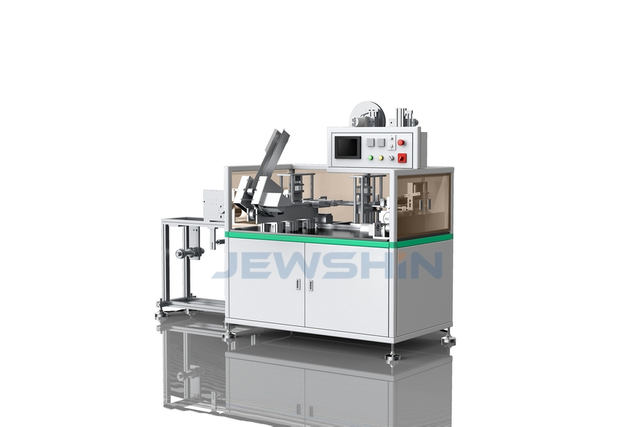
Automatic packaging machines streamline high-volume pharmaceutical packaging by keeping filling, sealing, inspection, coding, labeling, and cartoning within one controlled production flow. A line running at 300 packs per minute can theoretically process 144,000 packs in an 8-hour shift; at 85% operating availability, output is about 122,400 packs. Modern systems also use vision inspection, checkweighing, barcode verification, electronic batch records, and automatic rejection. The main gain is repeatable output at high speed without adding labor in proportion to production volume. FDA current Good Manufacturing Practice requirements and EU GMP rules also make documented controls, identification, contamination prevention, and packaging accuracy important parts of equipment selection.
High-volume pharmaceutical packaging starts with a capacity problem. A machine rated at 300 packs per minute has a theoretical capacity of 18,000 packs per hour, but rated speed is not the same as saleable output. At 90% availability and a 1% reject rate, one hour produces about 16,038 accepted packs rather than 18,000. A 2024 production plan based only on nameplate speed could therefore overstate an 8-hour shift by more than 15,000 packs.
That gap explains why manufacturers normally evaluate the complete line rather than the fastest individual machine. A tablet bottle line may include an unscrambler, electronic counter, desiccant inserter, capper, induction sealer, labeler, vision station, cartoner, case packer, and conveyors. If the counter handles 300 bottles per minute but downstream equipment handles 220, usable line capacity remains close to the lower rate.
At 220 bottles per minute, a 10-minute downstream stop represents up to 2,200 bottles of interrupted capacity. At 300 bottles per minute, the same stop represents 3,000.
Buffer conveyors and controlled accumulation give upstream equipment time to continue operating during short downstream interruptions. A buffer holding 600 bottles provides about 2 minutes of accumulation at 300 bottles per minute. That may absorb a brief carton replenishment or label-roll change without stopping filling, although longer interruptions still require coordinated line control.
Coordination also matters because pharmaceutical packages pass through several mechanical movements before release. Servo-controlled feeding can position bottles, blisters, leaflets, and cartons at repeatable intervals, while PLC-controlled stations exchange status signals. A sensor can confirm that a bottle is present before filling; another can confirm cap presence before induction sealing. At 250 containers per minute, the control system repeats the sequence 15,000 times per hour.
Repetition at that scale makes automated counting and dosing more practical than manual handling. A solid-dose line can use photoelectric or infrared counting channels to count tablets or capsules before discharge into a bottle. If a 100-count product runs at 120 bottles per minute, the equipment handles 12,000 dosage units every minute and 720,000 per hour, making reliable feeding and count verification important for sustained production.
Liquid packaging has different measurement requirements. Depending on the product and machine design, filling may use piston, peristaltic, mass-flow, or time-pressure systems. A 5 mL product filled into 60,000 containers represents 300 liters of product; an average 1% overfill would consume another 3 liters. Tight fill control therefore affects both compliance and material use when annual production reaches millions of units.
The same principle applies to packaging materials. A blister line producing 300 blisters per minute for 8 hours has a theoretical output of 144,000 blisters. Cutting errors, poor web registration, incomplete cavities, or seal problems at only 0.5% would affect 720 packs during that shift. Film tension control, registration sensors, temperature monitoring, and repeatable sealing pressure help keep losses within established process limits.
High speed does not compensate for poor process capability. A line producing 250 packs per minute can create 7,500 questionable packs during a 30-minute period if an out-of-range condition is not detected.
In-line inspection shortens that period. Vision systems can check tablet presence, blister cavities, cap position, labels, printed information, 1D barcodes, and 2D DataMatrix codes while production continues. A system inspecting 200 packs per minute evaluates 12,000 packs per hour. Automatic rejection removes units that fail predefined criteria without asking an operator to visually examine every package.
Human inspection still has a role in pharmaceutical quality systems, but repetitive high-speed inspection is difficult to sustain manually. At 240 packs per minute, an operator has only 0.25 seconds per package if every package passes one inspection point. Cameras and sensors can instead perform consistent checks while operators review alarms, rejection trends, equipment status, and sampled packages according to approved procedures.
Inspection data becomes more useful when it is connected with package identification. In the United States, the Drug Supply Chain Security Act was enacted in 2013 and established requirements for interoperable electronic tracing of certain prescription drugs. In the EU, safety-feature requirements under the Falsified Medicines Directive framework have applied since 2019 for most prescription medicines covered by the rules.
Serialization equipment therefore has to work at packaging-line speed. A printer may apply a unique identifier, a camera verifies readability and content, and software records the result. At 250 serialized cartons per minute, one 8-hour theoretical run involves 120,000 unique package identities. A verification failure has to be associated with the correct physical carton before that carton leaves the controlled rejection point.
Secondary packaging follows immediately after identification, making cartoning machines an important part of many automated lines. They erect cartons, insert bottles, blister packs, sachets, syringes, or leaflets, close the cartons, and can work with coding and inspection equipment. A cartoner processing 200 units per minute completes 12,000 carton cycles per hour, so feeding accuracy and carton quality affect the output of the entire upstream process.
Carton handling also creates several verification points. Sensors can check whether a carton was picked correctly, whether a leaflet is present, and whether the product entered the carton before closure. A checkweigher may provide another control after cartoning. If a finished carton should weigh 85 g and a missing component reduces weight by 5 g, an appropriately validated weighing system can identify the difference within its established operating range.
| Production condition | Example rate | 8-hour theoretical volume |
|---|---|---|
| Bottle packaging | 120/min | 57,600 |
| Blister packaging | 200/min | 96,000 |
| Cartoning | 250/min | 120,000 |
| High-speed packaging | 300/min | 144,000 |
The figures show why small efficiency changes become substantial at commercial scale. A line with theoretical output of 120,000 packs per shift produces 102,000 at 85% effective output and 108,000 at 90%. The 5-percentage-point difference adds 6,000 packs per shift. Across 250 production days, that is 1.5 million additional packs without increasing rated machine speed.
Availability depends heavily on changeovers. Pharmaceutical plants often package several strengths, pack counts, markets, or carton sizes on shared equipment. If four weekly changeovers each require 90 minutes, the line loses 6 hours per week. Cutting each changeover to 45 minutes returns 3 production hours; at an effective rate of 180 packs per minute, those hours represent 32,400 packs of available weekly capacity.
Recipe-controlled settings can reduce manual adjustment during those changes. Servo positions, conveyor speeds, inspection parameters, coding settings, and format-specific values may be stored under controlled recipes where equipment design permits. Operators still need approved line clearance and setup verification. Under FDA 21 CFR Part 211, packaging and labeling operations require written procedures designed to prevent mix-ups and mislabeling.
Cleaning and product contact also affect available production time. A machine that runs 7 hours but requires 2 hours for cleaning and setup has a different daily capacity from a machine producing at the same nominal speed with a 1-hour turnaround. For 200 packs per minute, one recovered production hour provides up to 12,000 additional theoretical packs, so cleanability matters alongside mechanical speed.
Automatic handling can reduce unnecessary product contact during those production hours. Tablets can move from a hopper through counting channels into bottles without repeated hand transfer, while blister products can move through forming, feeding, sealing, inspection, and cutting within enclosed equipment. Fewer manual transfer points also reduce opportunities for product mix-ups, particularly when several packaging components are present in the same facility.
GMP control still depends on procedures, trained personnel, equipment qualification, cleaning, maintenance, material reconciliation, and documented review. Automation does not replace any of those requirements.
Maintenance performance becomes more important as line speed rises. A bearing, vacuum pickup, sensor, belt, feeder, or printer that causes six 5-minute stops per shift removes 30 minutes of production. At 240 packs per minute, that equals 7,200 packs of theoretical capacity. Recording stop duration and reason lets engineering teams separate recurring equipment faults from material, setup, or operator-related interruptions.
Production records can provide the same visibility across longer periods. Modern systems may record accepted quantity, rejected quantity, machine state, alarms, operating speed, recipe selection, downtime, and inspection results. If monthly records from 20 production batches show that carton-feeding stops account for 35% of downtime, maintenance work can focus on the feeder rather than increasing the nominal speed of another station.
Rejected packages also need controlled handling. At a 0.8% reject rate, a batch of 150,000 units produces 1,200 rejected packages. Reducing rejection to 0.4% lowers that figure to 600. Manufacturers still need validated reject mechanisms, secure reject collection, reconciliation procedures, and investigation rules appropriate to the product because a lower percentage does not remove the need to account for nonconforming units.
Energy, compressed air, packaging film, labels, cartons, and product giveaway add another layer to operating cost. A line consuming 5% more packaging material than necessary across 20 million annual packs effectively purchases material for another 1 million packs. Registration control, stable sealing, accurate filling, and well-maintained cutting systems can therefore influence unit cost even when hourly output stays unchanged.
Large-volume operations finally depend on balancing speed with sustained control. A 300-pack-per-minute machine running effectively for 60% of scheduled time produces less than a 240-pack-per-minute line operating effectively for 85%: over 8 hours, the first produces 86,400 packs, while the second produces 97,920. For pharmaceutical packaging, stable accepted output per scheduled hour is more useful than maximum machine speed alone.